


At its core, a UGC agency is a matchmaker. You create a business that connects brands needing authentic, user-style content with talented creators who can produce it. You're the one managing the entire process, from understanding the brand's goals to delivering ready-to-use photos and videos.
This model thrives on the huge demand for genuine, relatable advertising—something that’s become incredibly hard for brands to create on their own.
Why the UGC Agency Model Is Booming Right Now
Let's cut right to it. The rise of User-Generated Content (UGC) isn't just another marketing trend. It’s a direct result of a massive shift in how people view advertising. For decades, brands pushed glossy, hyper-produced ads. Now, that same perfection often feels fake and untrustworthy.
This change has swung the doors wide open for a new kind of creative partner: the UGC agency. Brands know they can't manufacture authenticity, but they desperately need it to reach today's skeptical consumers. They need a steady pipeline of content that feels real because it is real, made by actual people using their products in everyday life.
And this isn't just a gut feeling—the numbers are staggering. The user-generated content market has skyrocketed to over $7.6 billion, which is a 69% jump from the year before. This explosion is happening for two simple reasons: brands need cheaper, more effective marketing, and an incredible 84% of consumers now trust content from real people over anything a brand produces itself. You can find more data on how UGC statistics are reshaping marketing strategies on whop.com.
The Perfect Storm for Agency Growth
A few powerful forces have aligned to make this the perfect time to launch a UGC agency. Getting a handle on these drivers is key, as they are the foundation of the sales pitch you'll be making to your future clients. You’re not just offering content; you're solving a critical business challenge.
Here’s what’s fueling the fire:
- The Collapse of Trust in Traditional Ads: People have become experts at tuning out traditional advertising. They’ll scroll right past a polished ad but will stop and watch a raw, unfiltered video from someone who looks and sounds just like them.
- Ad Costs Are Through the Roof: Platforms like Facebook and Google are more crowded and expensive than ever. The cost to acquire a customer has climbed dramatically. UGC offers a much more efficient path, often generating better engagement and more sales at a lower cost.
- The Never-Ending Content Treadmill: Social media algorithms are hungry and demand a constant flow of new posts. Most brands, especially smaller ones, simply don't have the time or money to keep up with that demand using an in-house team. A UGC agency is their scalable solution.
Key Insight: Remember, you aren't just selling videos. You're selling trust, efficiency, and scale. When you talk to potential clients, frame your services around these three pillars. It will connect directly with marketing managers who are under pressure to hit their goals on a tight budget.
Capitalizing on Market Demand
The need for this kind of content isn't limited to small, direct-to-consumer startups anymore. Even huge corporations are now shifting major chunks of their marketing budgets to creator-made content. They've seen firsthand how a single great UGC video can deliver better results than an entire high-budget ad campaign.
This is exactly where your agency fits in. You become the essential link, handling the messy work of finding, vetting, and managing creators. You guarantee a certain level of quality and consistency, transforming what would be a huge headache for a brand into a streamlined service that delivers a clear return on investment. The market isn't just asking for UGC; it's begging for sharp, reliable agencies to provide it.
Laying the Groundwork to Stand Out and Compete

It’s easy to get caught up in the excitement of finding your first client, but the agencies that last are the ones built on a solid foundation. Skipping the "boring" stuff like legal setup and branding is a mistake. These aren't just administrative tasks to check off a list; they are the strategic moves that give you credibility and the power to compete right out of the gate.
Your first big decision is how to structure your business legally. This isn't just about paperwork—it’s about protecting your personal assets. A Sole Proprietorship is quick, but it leaves you completely exposed. If the business gets into trouble, your personal savings and property are on the line.
The smarter play for most is forming an LLC (Limited Liability Company). It creates a legal wall between your business and personal finances. Yes, it takes a bit more effort and a small filing fee, but that initial investment buys you crucial peace of mind and makes you look far more professional to potential clients.
Find Your Niche—It's Your Superpower
The UGC agency market is noisy. If you try to be everything to everyone, you’ll end up being nothing special to anyone. The fastest way to break through the clutter is to specialize in a very specific niche. Your mission is to become the absolute go-to expert for one type of client.
Don't just be a "UGC agency." Be…
- The go-to agency for high-energy TikToks for DTC coffee subscription brands.
- The specialist in authentic video testimonials for B2B SaaS companies.
- The expert team producing launch content for pet product brands on Amazon.
When you focus like this, your marketing becomes incredibly effective. You know exactly who your ideal client is, what keeps them up at night, and how to talk to them. So when a brand in your niche starts looking for help, you're not just an option—you're the only logical choice. For instance, if you target travel companies, knowing the ins and outs of strategies like those in our guide to travel SEO gives you a massive advantage.
Build a Brand That Your Ideal Client Can't Ignore
With your niche locked in, your brand identity should naturally fall into place. This is so much more than a logo. It’s the entire vibe of your agency. If you're targeting edgy fashion brands, your website and social presence need to have that same bold aesthetic. If you’re working with health and wellness tech, your brand should feel clean, modern, and trustworthy.
Key Insight: Your brand isn't for you; it's for your ideal client. Every single element, from your agency's name to the copy on your homepage, must be designed to resonate with the marketing managers in your niche. This makes you feel like an insider, a partner, not just another vendor trying to sell them something.
The Only Tech Stack You Need (For Now)
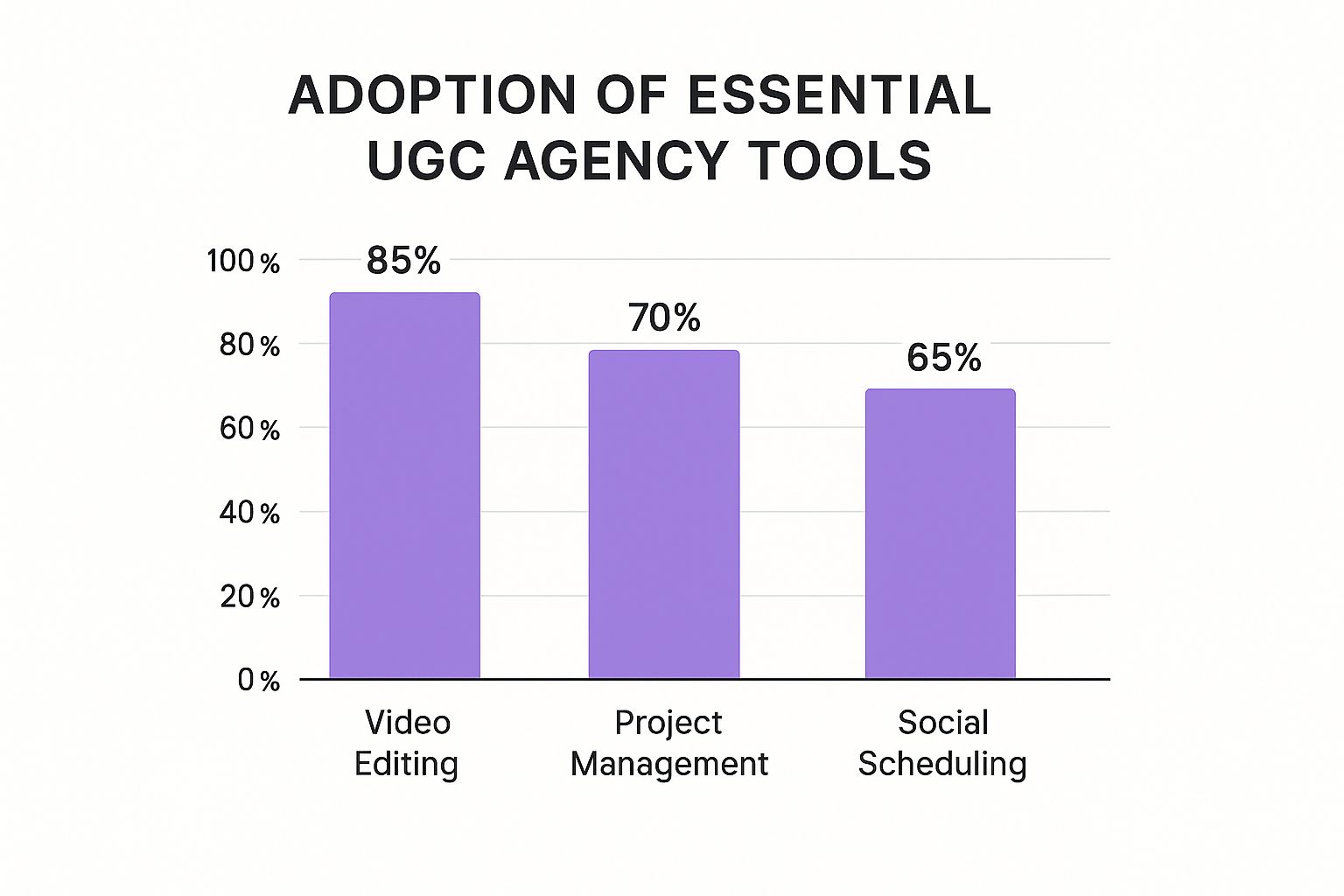
You don’t need a dozen fancy software subscriptions to look and operate like a pro. Start with a lean, effective tech stack that solves real problems without killing your budget. Focus on the core functions: managing projects, getting paid, and communicating professionally.
Here’s a simple, battle-tested stack to get you going:
- Project Management: Something like Trello or Asana is non-negotiable for keeping track of creator tasks, client feedback, and deadlines. The free versions are more than powerful enough for your first few clients.
- Finance & Invoicing: Use a tool like Wave or QuickBooks Self-Employed. Seriously, get your finances organized from day one. It will save you from a world of pain come tax time.
- Professional Communication: A custom domain email (like
yourname@youragency.com) is a must. It’s an instant credibility booster and shows you’re serious. A generic Gmail address just doesn't cut it.
This minimalist setup provides everything you need to run your business smoothly. You can always add more specialized tools as you scale and your revenue grows, but this foundation ensures you start off on the right foot—organized and professional.
How to Price Your UGC Services for Profitability
Alright, let's talk money. Setting your prices is where the rubber meets the road for your UGC agency. It's the step that turns your idea into a business that can actually pay the bills. If you get this wrong, you'll find yourself stuck in a cycle of being busy but broke. But if you get it right? You’ll build a sustainable agency that thrives.
The biggest mistake I see new agency owners make is simply tacking a small markup onto whatever they pay their creators. This approach completely misses the point. You're not just a middleman; you're a strategist, a project manager, and a quality control expert all rolled into one. Your pricing needs to reflect that immense value.
Crafting Concrete Service Packages
Instead of a confusing menu of individual services, your life will be so much easier if you bundle your offerings into clear, concrete packages. This helps clients immediately understand what they're getting and streamlines your entire sales process. Think of each package as a direct solution to a specific client problem.
Here are a few ideas to get you started:
- The Content Sprint: This is a one-off project perfect for a product launch, a new marketing campaign, or a seasonal push. You might offer something like 10 short-form videos and 20 lifestyle photos, all delivered within a tight timeframe. It’s a fantastic way for a new client to try you out without a scary long-term commitment.
- The Monthly Retainer: This is the holy grail for agency stability. A brand pays you a fixed fee every month for a continuous flow of fresh content. For example, a client could receive 5-8 new videos monthly. This gives them a predictable stream of content and gives you reliable, recurring revenue.
- The Performance Partnership: This is a more advanced model that works best with established clients where you've already built a ton of trust. You might charge a lower base retainer plus a commission on sales directly tied to the UGC you produce. This transforms you from a vendor into a true growth partner.
The Profitability Formula
So, how do you actually calculate your rates? You need a simple formula that ensures you're covering all your costs and building in a healthy profit margin from day one.
Your Rate = (Creator Fees + Your Agency Margin) + Hard Costs
Let’s break that down with a real-world example.
Imagine a client wants 5 UGC videos.
- Creator Fees: You find five creators who each charge $150 per video. Your total creator cost is $750.
- Agency Margin: This is your profit and covers your time, expertise, and management. A solid starting point is a 100% markup on creator fees. So, you add another $750 as your margin.
- Hard Costs: The client needs to ship their product to all five creators, and shipping costs $10 per creator. That's a $50 hard cost.
Your total price to the client would be $750 (Creators) + $750 (Your Margin) + $50 (Shipping) = $1,550. This simple math ensures you're not just covering expenses but are actively building a profitable business.
Choosing the Right Pricing Model
Once you have your packages defined, you need a clear pricing model. The one you choose will really depend on the client, the scope of work, and your own business goals.
To make it easier, here’s a quick comparison of the most common models I've used.
UGC Agency Pricing Model Comparison
This table compares the most common pricing models for UGC agencies, helping you choose the right strategy for your services.
| Pricing Model | Best For | Pros | Cons |
|---|---|---|---|
| Per-Video / Per-Photo | Small, one-off projects or clients with very specific, limited needs. | Simple to quote and easy for clients to understand. | Doesn't capture the full value of strategy and management; can lead to unpredictable income. |
| Package Deals | Most client engagements, especially for getting started with a new client. | Clearly defined scope and deliverables; much easier to sell and manage. | Requires accurate scoping; scope creep can eat into profits if not managed well. |
| Monthly Retainers | Clients who need a constant supply of fresh content for social media or ads. | Provides predictable, recurring revenue and builds strong client relationships. | Requires consistent delivery and proving ongoing value to avoid churn. |
For most new agencies, I strongly recommend starting with package deals. It’s the perfect balance of clarity for the client and profitability for you. As you build trust and deliver great results, you can strategically transition those happy clients to monthly retainers.
For instance, property managers are a great niche for retainers because they always need fresh content. If you're targeting that market, you can learn more about creating compelling Airbnb UGC content to attract clients and build a service that sells itself.
Building an Elite Creator Network From Scratch

Let's be clear: your creator network isn't just a list of names. It’s the very engine of your agency. Brands are paying you for access to reliable, creative talent, so the quality of your network will make or break your reputation. This means you need to shift your thinking away from public marketplaces and toward building a private, high-quality talent pool.
The real value you bring to the table is curation. You’re not just finding someone to make a video; you’re finding the right person whose authentic style perfectly matches a client's brand. This is your most defensible asset and what will truly set you apart.
Finding Talent Beyond the Usual Suspects
Forget the crowded creator marketplaces where you're competing on price. The real gems—creators with genuine passion and untapped talent—are found in their natural habitat. To find them, you need to go deep.
Go deep into platforms like TikTok, Instagram Reels, and YouTube Shorts. Search for hyper-specific, niche hashtags that brands aren't already flooding. Instead of #skincare, search #acnejourney or #rosaceatips. Instead of #fitness, try #marathontraining or #postpartumworkout. Look for micro-creators with high engagement whose content feels raw and genuinely helpful, not polished and "influencer-y."
Once you spot someone with potential, don't just slide into their DMs with a generic, "Hey, wanna collab?" That’s an instant turn-off. Instead, reference a specific video you loved and tell them why it was so good. This personalized approach shows you’ve actually done your homework and respect their unique creative style.
My Two Cents: A small, curated network of 10-15 highly reliable creators is infinitely more valuable than a database of 1,000 unvetted names. Focus on building quality relationships, not just a massive list. This approach is how you confidently promise—and deliver—exceptional content for any client brief.
Vetting for More Than Just Views
A creator's follower count is probably one of the least important metrics you should look at. Seriously. What you really need to care about is a mix of their creativity, reliability, and professionalism. Your vetting process is your quality control, so don't skip it.
Here’s what I look for when vetting a new creator:
- Raw Creativity: Does their content have a unique angle? Do they intuitively understand hooks, pacing, and visual storytelling, even on their personal account?
- Communication Skills: How do they reply to your outreach? Are their messages clear, professional, and timely? A creator who’s a poor communicator will become a project management nightmare. Trust me.
- Niche Alignment: Does their personal brand and the audience they've built genuinely align with the kinds of clients you want to serve? You can't fake authenticity, so forcing a fit never, ever works.
This careful vetting is critical. The global user-generated content platform market was valued at USD 4.4 billion and is projected to skyrocket to USD 32.6 billion by 2030. With North America holding a massive 34.1% market share, the demand for well-managed, high-quality UGC is absolutely booming. Building a solid network now positions you to ride that wave. If you want to see the numbers for yourself, check out the UGC platform market analysis on grandviewresearch.com.
Standardizing Your Onboarding and Management
Once you've found your superstars, you need a system to manage them without pulling your hair out. A standardized onboarding process ensures every single creator knows your expectations from day one, which dramatically cuts down on friction later.
A great place to start is by building a simple "Creator Hub." You don't need fancy software; a tool like Notion or even a shared Google Drive folder works perfectly.
This hub should have everything a new creator needs to get started:
- Welcome & Expectations: A clear document outlining your agency’s process, how you communicate, and your payment terms.
- Contract Template: A simple, easy-to-understand independent contractor agreement. This protects both you and the creator.
- Payment Information Form: A secure way to collect their payment details, whether it's PayPal, Wise, or another service.
To manage your growing roster, a simple spreadsheet is all you need in the beginning. Create a private creator database in Google Sheets or Airtable. Include columns for their name, niche, contact info, a link to their portfolio, and notes on their performance. This database will become your agency's secret weapon, allowing you to quickly find the perfect creator for any new client that comes your way.
Landing Your First High-Value Clients
Once your agency's foundation is set and you've started building your creator network, it's time to tackle the most important part: getting paid. Landing that first big client is a massive milestone, but it won’t happen by just posting on social media and hoping for the best. You need a direct, repeatable outreach strategy that puts you in front of busy marketing managers and proves your worth from the very first email.
Forget generic approaches. They're a complete waste of time. The real key is shifting your mindset from being a "content vendor" to a "growth partner." You're not just selling videos; you're selling a solution to a brand's biggest marketing headaches.
Crafting Cold Emails That Actually Get Opened
Believe it or not, cold emailing is still one of the most effective ways to land clients—if you do it right. A generic, mass-blasted email is a one-way ticket to the trash folder. Your goal is to create a personalized message so relevant that the marketing manager feels like you wrote it just for them. Because you did.
Here’s how to make your outreach stand out:
-
Do Your Homework: Before you even think about writing, spend 10-15 minutes digging into the brand. Look at their social media, their recent ads, and their product pages. Find a real, specific reason to reach out. Maybe you noticed they aren't using video on their product pages, or their TikTok presence feels a bit disconnected from their other channels.
-
Lead with Value, Not a Sales Pitch: Your opening line should never be about you. It needs to be about them. Instead of starting with, "Hi, I run a UGC agency," try something like, "I saw your new X product launch and noticed you're getting great engagement on Instagram, but I had an idea for how you could bring that same energy to TikTok."
-
Keep It Short and Scannable: Marketing managers are completely swamped. Keep your email to no more than 3-4 short paragraphs. Use bullet points to quickly highlight what you can do for them. End with a clear, low-friction call to action, like, "Are you open to a quick 15-minute chat next week to discuss this?"
Pro Tip: Your subject line is everything. Ditch the clickbait and be specific and intriguing. Something like "Idea for [Brand Name]'s TikTok Strategy" or "Quick question about your video content" is far more likely to get opened than a generic "UGC Agency Services."
Building a Portfolio When You Have Zero Clients
Ah, the classic chicken-and-egg problem: you need a portfolio to get clients, but you need clients to build a portfolio. The answer? Spec work.
Speculative work is when you proactively create UGC for brands you want to work with, without them hiring you first. This strategy is incredibly powerful. It shows you have initiative, demonstrates your creative eye, and gives you concrete examples to attach to your outreach emails.
Pick two or three brands in your niche, buy their product, and have one of your best creators produce a few sample videos. It's a small investment that can pay off in a big way.
The power of UGC becomes undeniable when you have solid data to back up your pitch. Brands incorporating UGC into their social strategies report up to 28% higher engagement rates, and this can jump by 50% with visual UGC like videos. Even better, embedding UGC on product pages can boost conversion rates by a massive 200%. When you mention that UGC-driven ads also get four times higher click-through rates, you're no longer just talking about content—you're talking about tangible business results. You can read more about how UGC trends are driving ROI on creatorlabz.com.
Using LinkedIn to Make Genuine Connections
LinkedIn isn’t just a digital resume; it's a goldmine for client acquisition if you use it for relationship building, not spamming. Start by identifying the marketing managers or brand managers at companies you’d love to work with.
Instead of sending a cold connection request and pitching them immediately, play the long game. Engage with their content first. Like and leave thoughtful comments on their posts for a week or two. When you finally send a connection request, personalize it. Mention a post they wrote or a recent company win.
Once you’re connected, hold off on the pitch. Wait for a natural opening or send a low-pressure message.
For instance, if you're targeting travel brands, connecting with their marketing team is a smart move. This approach mirrors what successful creators do to land deals. In fact, our guide on how to become a travel influencer shares similar networking principles you can adapt for your agency's outreach. It’s all about building authentic relationships first.
Scaling Your Operations Without Burning Out

Landing your first few clients is an incredible feeling. But this is also where the real work—and the real risk of burnout—begins. Many promising UGC agencies hit a ceiling, not because they can't find more clients, but because their internal workflows simply can't handle the volume.
To grow, you have to shift your mindset from being the doer of all tasks to being the architect of a system. This pivot is what separates the agencies that thrive from those that flame out. It all starts with creating repeatable, documented processes for every moving part of your business. My rule of thumb? If you find yourself doing the same task for the third time, it's time to build a Standard Operating Procedure (SOP). This isn't about adding corporate red tape; it's about freeing up your mental energy for the big picture.
Document Everything You Do
Take a minute and map out your entire client and creator journey. From the very first contact with a potential client to the final delivery of content, every single step should be a clear, documented process. I know it sounds tedious, but this is the bedrock of a scalable agency.
Start small by creating simple checklists or templates for your most common activities:
- Client Onboarding: A step-by-step guide covering everything from sending the welcome kit and scheduling the kickoff call to gathering brand assets and logins.
- Creative Briefing: A standardized template you can send to creators. This ensures you get all the crucial details upfront and avoids endless back-and-forth.
- Content Feedback Loop: A clear, non-negotiable process for sharing client feedback with creators and tracking any revisions.
- Final Delivery: A pre-written email template for handing over the final content, complete with download links, usage rights reminders, and a friendly ask for a testimonial.
These documented systems are your secret weapon for consistency. As you grow, it won't matter if it's you, a virtual assistant, or a future project manager handling a task—the client gets the exact same high-quality experience every time.
Knowing When to Hire and What to Delegate
As the work piles up, you’ll inevitably hit your personal capacity. This is a make-or-break moment. You must decide to hire help. I've seen too many founders wait too long, and the result is always the same: missed deadlines, declining quality, and complete exhaustion. The second you start feeling consistently swamped is the moment you need to be actively looking for your first hire.
For most agency owners, the first hire should be a Virtual Assistant (VA) or a Project Manager. The goal is simple: offload all the repetitive, administrative tasks so you can focus on high-value work like sales, client strategy, and building your creator network.
Key Insight: Don't wait until you're drowning to start delegating. The best time to hire is just before you think you absolutely need it. This gives you the breathing room to train them properly without the stress of looming deadlines.
Here are the first tasks you should look to hand off:
- Creator Sourcing: A VA can easily handle initial outreach to creators based on a clear set of criteria you provide.
- Inbox Management: They can filter your emails, handle common questions with templates, and flag only the urgent messages that need your eyes.
- Scheduling: Let them take over booking kickoff calls, client check-ins, and creator interviews.
- Data Entry: This is perfect for a VA—things like updating your creator database or tracking project statuses in Asana or Trello.
Using Automation to Handle the Grunt Work
Even before you hire a person, automation can act as your first digital employee. You can save yourself hours every week by using simple tools to handle the grunt work, allowing you to manage more clients without losing your mind.
Think about the time-sucking, repetitive tasks you do every day. There’s probably a tool for that.
- Use an email tool like Boomerang to schedule and automate follow-up sequences.
- Connect your lead form to your project management software with Zapier. When a new client signs up, a project card can be created automatically.
- Set up automated payment reminders in your invoicing software, like Wave or QuickBooks.
Scaling isn't just about making more money. It’s about building a business that can run smoothly without you being personally involved in every single detail. By creating systems, delegating effectively, and automating relentlessly, you build a foundation for sustainable growth. This is how you transition from being a freelancer with a fancy business name to the CEO of a thriving agency.
Common Questions from New UGC Agency Founders
When you're first starting a UGC agency, it feels like you have a million questions and not enough clear answers. Let's cut through the noise. Here’s some straightforward advice, based on what actually works, to help you get started on the right foot.
How Much Cash Do I Actually Need to Start?
You can get a UGC agency off the ground for surprisingly little money—often under $1,000. Seriously. Your main costs will be the essentials: registering your business (like an LLC), grabbing a professional domain name and email, and maybe a few subscriptions for project management or accounting software.
Many founders start with free tools and then reinvest their first check into better systems. Your biggest upfront investment isn't money; it's your time. Carving out the hours for solid client outreach and carefully building your creator network is where the real work lies.
Do I Have to Be a Creator Myself?
Not at all. In fact, some of the best agency owners aren't creators. Your primary role is to be a great strategist and an organized project manager. You're the bridge between the brand's goals and the creator's content.
While you absolutely need a good eye for what makes UGC compelling, your most critical skills are marketing, sales, client management, and ensuring quality control.
Think of yourself as a film director, not the actor. Your job is to orchestrate the entire production—from finding the perfect talent to making sure the final cut aligns perfectly with the brand's vision.
Where Do I Find Good, Reliable Creators?
Skip the massive, public creator marketplaces where everyone else is looking. Your secret weapon is finding untapped talent. Spend time scrolling through TikTok, Instagram Reels, and YouTube Shorts. Look for creators in your ideal niches who are already making fantastic, organic content for fun.
Reach out to them directly. Don't send a generic template; send a personalized, professional message that shows you've actually watched their stuff. Your goal is to build a small, private, and thoroughly vetted roster. A go-to list of 10-15 hyper-reliable creators is infinitely more valuable than a database of 10,000 strangers you can't count on.