


Hotel social media marketing is all about using platforms like Instagram, Facebook, and TikTok to show off your hotel's personality, connect with potential guests, and, most importantly, drive direct bookings. It’s about so much more than just posting pretty pictures of your rooms. The real goal is to create a digital experience that makes travelers feel what it’s like to stay with you before they even set foot on the property.
Why Generic Social Media Advice Fails Hotels
Let's be honest—the standard social media playbook just doesn't cut it for hotels. Vague advice like "post more" or "create better content" is useless in an industry that runs on aspiration and experience. You aren't selling a simple product off a shelf; you're selling a destination, a future memory, a feeling.
A coffee shop can get away with posting a latte picture every morning, but a hotel that only shares photos of empty beds will quickly fade into the background. The room itself is the commodity, but the experience is what people actually buy. This is the critical distinction where most hotel social media marketing plans fall apart.
Selling an Experience, Not a Room
Start thinking of your social media feed as a digital extension of your guest experience, not just a catalog of available rooms. It’s often the very first place a potential guest decides if your hotel's vibe matches the vacation they’ve been dreaming about.
Your feed should be crafted to answer the questions travelers are subconsciously asking:
- What will my morning look like waking up here?
- What special moments can I capture and share with my friends?
- How will this place make me feel?
Generic content shows off amenities; great content sells an emotion. The aim is to make someone feel like they're already on vacation just by scrolling through your profile. This is what separates the hotels that are thriving online from all the rest.
Moving Beyond Vanity Metrics
The hospitality world is incredibly visual and driven by social proof. While a high follower count looks good on the surface, it doesn't pay the bills. A truly effective strategy focuses on actions that lead straight to revenue—like clicks to your booking engine, DMs about event spaces, or post saves on your guide to local hotspots.
This means you need a mental shift. Stop broadcasting and start building a story. For instance, a post shouldn't just announce, "Our pool is open." It should show a guest laughing with a craft cocktail by the water, captioned with a tempting description of your new poolside menu. You're not just showing the pool; you're selling the perfect pool day.
This storytelling approach ensures your content connects on an emotional level, which is far more persuasive than a dry list of features. While social media is essential for getting seen, it needs to work hand-in-hand with your other digital efforts. To really boost your online presence, you also need to nail the basics of https://travelugc.com/travel-seo/ so guests can find you on Google when they're ready to book. When you integrate these strategies, you create a powerful system for attracting and converting the exact guests you want.
Crafting Your Hotel's Unforgettable Brand Story
Before you ever post a photo or boost a single ad, your social media needs a solid foundation. This isn't about listing your amenities or room types; it's about your brand's unique story. A compelling story is what turns your hotel from just a place to sleep into a destination people truly dream about visiting.
Without a clear narrative, your content will feel scattered and disconnected. One day you're a quiet, romantic getaway; the next, you're a bustling hub for business travelers. This mixed messaging just confuses potential guests and, worse, fails to attract the right ones—the people who will love their stay and become your biggest fans.
Identifying Your Core Brand Pillars
Think of your brand story as the central theme of a movie. Everything—the characters, the setting, the plot—all works together to support that main idea. For your hotel, this means figuring out the core pillars that define the experience you're selling. These aren't just services; they're the emotions and memories you want guests to walk away with.
Start by asking some tough questions:
- What feeling are we actually selling? Is it the serene escape of a wellness retreat? The electric energy of an urban adventure? Or the comforting joy of a family-focused resort?
- What makes us genuinely different? Dig deeper than "great service." Is it your radical commitment to sustainability? Your exclusive partnership with a local Michelin-starred chef? Or maybe your building’s architecture tells a fascinating historical story?
- Who is the hero of our story? Who is this ideal guest? What do they truly value, and what problem are they trying to solve by staying with us?
Your answers to these questions are the pillars of your brand. For a boutique hotel in a trendy arts district, the pillars might be Artistic Immersion, Local Authenticity, and Urban Exploration. From that point on, every single piece of content you create should tie back to one of these pillars.
Analyzing Competitors to Find Your Niche
Looking at what your competitors are doing isn't about copying their playbook. It's about finding the open space in the market—the gap that you can fill and completely own. If every other hotel in your city is screaming about "luxury and comfort," you have a golden opportunity to stand out by talking about something else entirely.
Scroll through their social media feeds. What stories are they telling? Are they all showing off the same poolside relaxation shots? Great. Maybe your story can be about all the thrilling adventures waiting just outside your doors. Are they all focused on families? Perhaps you can become the go-to spot for solo travelers or couples seeking a quiet escape.
Your mission is to find your "only." Strive to be the only hotel in the area that offers in-room art supplies for creative guests, or the only one with a dedicated "adventure concierge" who plans incredible off-the-beaten-path trips. This unique position is the hook for your entire social media strategy.
Building Your Ideal Traveler Persona
Once you've got your story and your unique spot in the market, you need to know exactly who you're talking to. This is where a traveler persona comes in. It’s a detailed, almost fictional profile of your perfect guest, and it goes way beyond basic demographics like age and income.
A truly useful persona includes:
- Motivations: Why are they traveling in the first place? Is it for relaxation, adventure, work, or cultural discovery?
- Pain Points: What frustrates them about travel? Maybe they hate tourist traps, struggle to find good, healthy food on the road, or get stressed out about traveling with their pets.
- Social Habits: Where do they find travel inspiration? Are they scrolling TikTok for viral destinations, or do they prefer reading in-depth travel blogs? Who do they follow and trust?
Creating this detailed persona ensures your content connects. You'll know what kind of humor they'll get, what visuals will make them stop scrolling, and what information will make them feel like you truly get them. This is how you stop chasing an audience and start building a real community.
Choosing Platforms That Drive Bookings, Not Just Likes
A fantastic brand story means nothing if you're telling it to an empty room. When it comes to social media for your hotel, picking the right platform is just as critical as the content you create. The real goal isn't just to rack up likes or followers; it’s about finding the digital spots where your ideal guests are already dreaming, planning, and—most importantly—making booking decisions.
One of the most common pitfalls is spreading your team and budget too thin across every social media channel out there. This almost always leads to burnout and mediocre results. A much smarter play is to focus your energy on the platforms that actually line up with your hotel's personality and business goals. Think of it less like shouting with a megaphone and more like having a meaningful conversation in the right place.
This infographic gives you a quick snapshot of average engagement rates across the major platforms. It's a great starting point for seeing where users are most interactive.
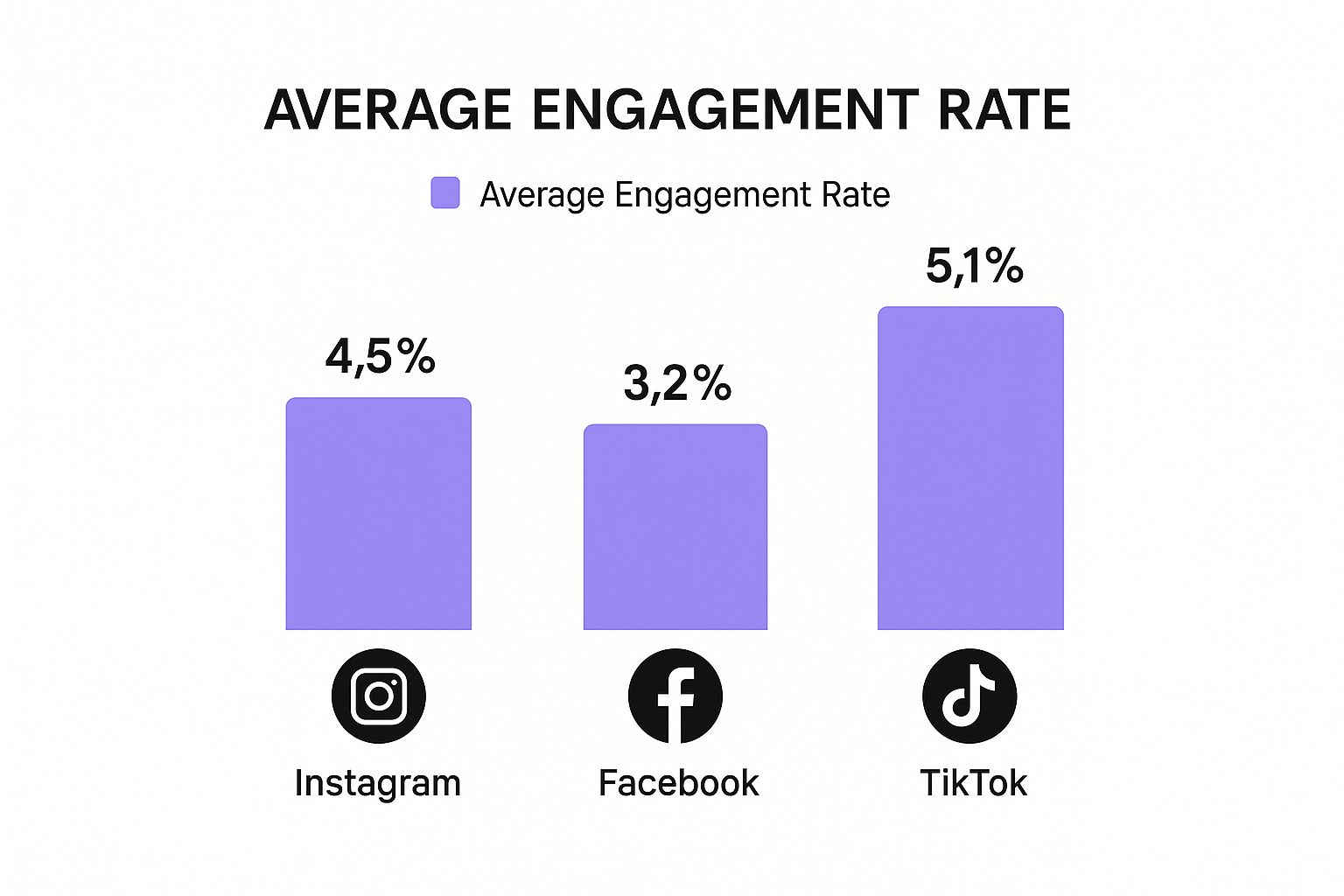
While TikTok might be leading the pack in raw engagement, the numbers show that every platform has a deeply engaged user base. The "best" choice really comes down to who you're trying to reach and what you're trying to achieve.
Finding Your Fit: A Platform-by-Platform Breakdown
To help you decide where to invest your time and resources, let's look at the strengths of the top platforms for hotels. Each one serves a different purpose and speaks to a different kind of traveler.
| Platform | Primary Audience | Best Content Format | Strategic Goal |
|---|---|---|---|
| Millennials & Gen X, visually-driven travelers, luxury and lifestyle seekers. | High-quality photos, Reels, Stories, influencer collaborations. | Build brand desire and showcase the guest experience. | |
| TikTok | Gen Z & younger Millennials, trend-followers, experience-driven travelers. | Short-form video, behind-the-scenes content, trend participation. | Drive viral brand awareness and appear authentic. |
| Gen X & Baby Boomers, family travelers, event attendees. | Photo albums, event promotions, targeted ads, community groups. | Nurture community loyalty and drive direct bookings. |
As you can see, a one-size-fits-all approach just doesn't work. The key is to match your hotel's unique identity and goals with the platform's core strengths.
Instagram: The Visual Storytelling Powerhouse
For hotels, Instagram is the undisputed champion of visual aspiration. It’s the digital equivalent of a glossy travel magazine where people go to get inspired, discover new destinations, and mentally plan their next vacation. Its real power is in selling an experience through stunning images and immersive video.
- Best for: Hotels with a strong visual identity—think boutique properties with unique design, resorts with breathtaking landscapes, or city hotels with a killer vibe.
- Strategic Goal: To build brand desire and fill the top of your marketing funnel. Instagram is your stage for showing off your hotel's personality, from detailed shots of bespoke amenities to Reels that capture the energy of your neighborhood.
- Content That Converts: Focus on high-quality photo carousels, aesthetic Reels, and interactive Stories. Working with travel creators is especially powerful here; their followers genuinely trust their recommendations.
TikTok: Capturing the Next Generation of Travelers
Don't dismiss TikTok as just a dance app for kids. It has quickly become a go-to search engine for travel, especially for a younger crowd. The algorithm rewards authenticity and creativity, making it a goldmine for hotels looking to connect with a more adventurous demographic.
- Best for: Hotels that want to showcase their personality, unique offerings, and behind-the-scenes culture. It’s less about polished perfection and much more about being real.
- Strategic Goal: To drive viral awareness and connect with Gen Z and Millennial travelers. TikTok is where trends are born, and one great video can put your hotel on the map for millions of potential guests.
- Content That Converts: Short-form video is everything here. Think "a day in the life of a guest," quick tours of hidden gems on your property, or even staff jumping on a popular trend. The key is to be relatable and entertaining, not overly promotional.
Facebook: The Community and Conversion Engine
While it might feel like the "older" platform, Facebook is still a beast for hotel social media marketing, particularly for targeted advertising and building a loyal community. Its ad platform is incredibly sophisticated, letting you zero in on specific audiences based on their travel intent, life events, and past online behavior.
Your Facebook presence should be less about chasing viral trends and more about nurturing a community of loyal fans and converting high-intent travelers with targeted offers.
One of the most underused features is Facebook Groups. You could create a group for past guests or locals interested in your restaurant and events. This fosters a deep sense of belonging and gives you a direct line to promote exclusive deals, turning your social page from a simple billboard into a genuine community hub.
Ultimately, the content that really moves the needle often comes straight from your guests. Research shows that user-generated content (UGC) can increase bookings by 2.5 times compared to your own branded content. On top of that, nearly half of all hotel guests (45%) say they are likely to book a promotion they discover on a social network. If you’re a creator looking to get in on this action, our guide on how to start a UGC agency offers a clear roadmap.
Creating Content That Sells The Entire Experience
Let's be honest: pretty pictures of empty, perfectly made beds are table stakes. Everyone has them. But those shots don't truly sell the dream. To stand out, your hotel social media marketing needs to sell the entire experience—the feeling, the atmosphere, and the memories a guest will walk away with.
Think of your social feed as a storybook, guiding potential guests through all the moments that make a stay with you special. You’re not just a place to sleep; you're the backdrop for their best stories.
Go Beyond the Room with Immersive Video
Static photos are expected. Immersive video is what truly captures the imagination. Imagine your hotel isn't just a building, but a movie set. A video tour shouldn't be a sterile walkthrough of a suite. Instead, it should be a first-person view of waking up, pulling back the curtains to a jaw-dropping view, and stepping onto a sun-kissed balcony.
This shift in perspective pulls the viewer into the scene. They aren't just looking at a room anymore; they're mentally putting themselves in it, feeling the sun on their skin. The real goal is to sell the emotion tied to the space.
So, don't just post a photo of your rooftop pool. Create an Instagram Reel that captures the entire vibe: the chill lounge music, the gentle clinking of cocktail glasses, and the city lights starting to twinkle below as the sun sets. That’s content that inspires action.
Humanize Your Brand with Staff Stories
Hotels are built on hospitality, which comes from people. Yet, all too often, the staff are invisible on social media. Featuring your team is one of the most effective ways to humanize your brand and forge a genuine connection with your audience.
A "day in the life" series can be incredibly powerful. Try a few of these ideas:
- Meet the Concierge: A quick video where your head concierge shares their top three "secret" local spots that you won't find in any guidebook.
- The Chef's Secret: Your executive chef walks followers through making the hotel's signature brunch dish, creating a delicious link between your feed and your F&B offerings.
- Behind the Bar: Let your lead mixologist craft a new seasonal cocktail on camera, explaining the story and local ingredients that make it unique.
This isn't just filler content. It builds incredible trust by showcasing the expertise and passion that define your guest experience. It sends a clear message: your hotel isn't just a building; it's a community of people ready to make a stay unforgettable.
Highlight Exclusive Local Partnerships
What can guests experience only by staying with you? Your local partnerships are a content goldmine just waiting to be tapped. These collaborations offer exclusive value and instantly position your hotel as the key to unlocking the best of your destination.
Move beyond simply listing "local attractions nearby" and start creating content around the unique experiences you offer:
- A private tour of a local artist's studio, available only to your guests.
- A "first taste" event at a nearby craft brewery you've partnered with.
- A guided morning hike with a local expert, starting right from your hotel lobby.
When you promote these one-of-a-kind experiences, you stop competing on price or room size. You start competing on access and exclusivity—a much more powerful differentiator in a crowded market. Your hotel transforms from a simple home base into the main event.
Leverage User-Generated Content for Authentic Proof
The most powerful advertising for your hotel won't come from your marketing team. It will come from your happy guests. User-Generated Content (UGC) is the ultimate form of social proof because it's authentic, trustworthy, and incredibly relatable. When potential customers see real people enjoying your property, it validates their own desire to book.
Encouraging and featuring UGC should be a core part of your strategy. Get intentional about creating "Instagrammable" moments throughout your property—a quirky art installation, a neon sign with a clever phrase, or a beautifully designed nook in your lobby. These serve as natural prompts for guests to snap a photo and tag you.
The impact here is huge. Industry data shows that a staggering 61% of travelers have booked a hotel after finding it on Instagram. And with 73% of consumers now preferring short-form video to learn about a product or service, encouraging video UGC is more important than ever. You can dig deeper into how social platforms influence travel decisions with these hospitality marketing statistics. By building your content plan around these pillars, you create a social presence that sells the dream, not just the room.
Mastering Influencer Partnerships That Actually Pay Off
Let's be honest: trading free hotel nights for a couple of blurry Instagram stories and a quick thank-you post is a strategy from a bygone era. That's not a partnership; it's a poor exchange. A truly effective approach treats influencer marketing as a direct revenue channel, not just another line item on your marketing budget.
Your goal is to build performance-based partnerships that deliver a measurable return. This requires a mental shift—stop chasing creators with massive, generic followings. Instead, focus on identifying partners whose audience perfectly mirrors your ideal guest. The right partnership can transform your hotel social media marketing from a cost center into a powerful, booking-driven engine.
Moving Beyond Big Names to Find Micro-Influencers
The most powerful influencers for your hotel are rarely the ones with a million followers. The real magic, and the real ROI, often lies with micro-influencers and niche creators—those with follower counts typically between 10,000 to 100,000. These creators have cultivated highly engaged, tight-knit communities that genuinely trust their recommendations.
Think of it like this: a mega-influencer's shout-out is like a giant billboard on a busy highway. Lots of people see it, but how many really act on it? A micro-influencer's recommendation, on the other hand, is like getting advice from a close friend who knows your tastes inside and out. Their audience doesn't just listen; they act.
Finding these hidden gems involves a bit of digital detective work:
- Scour your location tags: Who is already posting great content from your city, your neighborhood, or even your lobby?
- Dig into relevant hashtags: Search for terms that align with your brand, like #BoutiqueHotelNYC or #WellnessRetreatBali.
- Check your own followers: Your perfect partner might already be a fan of your hotel, just waiting to be discovered.
Structuring Deals That Drive Real Business
Once you've found a potential partner, it’s time to structure a deal that’s crystal clear and tracks every dollar. Vague agreements lead to vague (and usually disappointing) results. A professional contract with specific deliverables isn't optional; it's essential.
The single most crucial element of a modern influencer partnership is a mechanism for tracking ROI. Your agreement must focus on performance metrics that directly connect the creator's content to your bottom line.
Here’s what you need to build into every single deal:
- Unique Booking Codes: Give each influencer a unique discount code (e.g., "SOPHIA15"). This is the simplest way to track every single reservation that comes directly from their audience.
- Affiliate Links: Use trackable affiliate links for your booking engine. When a follower clicks the link in the influencer’s bio or story and books a stay, the creator earns a commission, and you get undeniable proof of where that booking came from.
- Specific Content Deliverables: Spell out exactly what you expect. Don't just say "some posts." Be specific: "One Instagram Reel, one 5-image carousel post, and three Instagram Stories that include a direct link to book."
This performance-based model means you're paying for actual results, turning your influencer program into a predictable and scalable source of revenue.
Making Your Hotel an Attractive Partner
The best influencers are picky about the brands they partner with, and for good reason. To stand out and attract top-tier talent, you need to see things from their perspective. Many aspiring creators are actively seeking guidance on how to land these kinds of professional deals, which is a topic we cover in our guide on how to become a travel influencer. Understanding what they're looking for helps you craft an offer they can't refuse.
Ultimately, your success hinges on mutual respect and transparent communication. The trust factor here is enormous. Research shows that 88% of consumers trust recommendations from influencers as much as friends, and an incredible 41% of bookings are completed through links shared by these creators.
When you find the right person, you aren’t just buying exposure; you’re borrowing their hard-earned credibility. By building true partnerships, you tap into that trust and drive real, measurable business for your hotel.
How to Use Technology to Outsmart Your Competitors
If you really want to stand out in a jam-packed market, you have to move past just manually posting content. It’s time to embrace smart technology. These tools aren't just for the big hotel chains anymore; they're the secret weapon for any hotel looking to work smarter, not harder.
But it’s not just about scheduling posts or setting up a simple chatbot. Think of technology as your strategic co-pilot, guiding you toward better decisions that fill your rooms. It’s about getting a read on what your audience wants, sometimes even before they do.
AI: Your Crystal Ball for Marketing
Artificial intelligence (AI) gives you a serious leg up by predicting content trends and personalizing your ad campaigns on a massive scale. Forget guessing what might work. AI crunches huge amounts of data to figure out which photos, videos, and messages will truly connect with different kinds of travelers.
This means your ad targeting can get incredibly specific. With AI, you can run separate, automated campaigns that speak directly to:
- Adventure-seeking millennials: Show them exciting user-generated videos of someone hiking a trail right near your hotel.
- Business travelers: Target them with ads that spotlight your fast Wi-Fi and quiet workspaces.
- Families on a budget: Push a "kids stay free" special right before school holidays.
This kind of personalized marketing means your money is actually reaching the right people with the right message, which completely changes your return on investment. The industry is catching on fast, too—the AI sector in hospitality is expected to leap from $15.69 billion in 2024 to $20.47 billion in 2025. You can dive deeper into this in a 2025 hotel marketing trends report.
Turn Followers into Guests with Social Commerce
One of the biggest game-changers right now is social commerce. In simple terms, it means turning your social media pages into a storefront, letting people book a room without ever leaving the app. The easier you make it for them, the more likely they are to book.
The goal is to capture booking intent the moment it strikes. If a user is inspired by your content, they should be able to book a room without ever having to leave the app they're on.
Platforms like Instagram and Facebook are making this incredibly easy with "Shops" where you can feature bookable rooms or experiences. TikTok is also getting in on the action with its own shoppable features that integrate directly with booking engines. When you put these tools to work, you turn casual followers into confirmed guests in just a few taps—catching that wave of inspiration that traditional marketing funnels often miss.
Answering Your Top Hotel Social Media Questions
Let's be honest, social media for hotels can feel like a moving target. Just when you think you've got it figured out, an algorithm changes or a new platform emerges. Here are some straightforward answers to the questions I hear most often from hotel teams trying to make their social media efforts truly count.
What’s a Realistic Social Media Ad Budget for a Hotel?
There's no single perfect number, but a solid starting point is to allocate 5-10% of your overall marketing budget to social media ads. Think of it as a test-and-learn phase.
Start small on platforms like Facebook and Instagram. Use this initial budget to figure out what works—which photos catch the eye, which audiences are clicking, and what ad copy actually leads to bookings. Once you find a winning combination that delivers a strong return on ad spend (ROAS), you'll have the confidence and the data to invest more. The goal is to treat social ads as a performance engine, not just a way to get likes.
How Should We Deal with Negative Comments and Reviews?
A negative comment isn't a crisis; it's an opportunity. It gives you a public stage to prove your commitment to guest satisfaction. The key is to respond quickly, professionally, and with genuine empathy.
- Acknowledge and Apologize: Always start by validating their feelings. A simple, "We're truly sorry you had this experience," goes a long way.
- Take It Offline: Your next move should be to take the conversation private. Offer a clear path to resolution, like, "Please send us a direct message with your details so our guest relations manager can reach out to you personally."
- Don't Delete (Unless It's Spam): Hitting delete on a bad review looks suspicious and breaks trust. A thoughtful public reply shows everyone—including future guests—that you listen and you care.
Is It Worth Paying Influencers with Free Stays?
The days of simply trading a free room for a few posts are over. For a hotel social media marketing strategy to be effective, influencer partnerships need to be rooted in performance. It’s time to move beyond the "free stay" model and start tracking real ROI.
Here's the pro move: Give every influencer a unique, trackable booking code or affiliate link. This simple step shifts the entire dynamic. You're no longer guessing at their value; you're seeing exactly how many bookings their content drives. This turns your influencer program from a marketing expense into a predictable revenue stream.